


P · W · FIELD CO.

the field journal of
approval:
issue no:
length:
batch:
007
15 min
PART LOGBOOK, PART CONFESSION, PULLED STRAIGHT FROM THE FIELD.
WRITTEN &
DEVELOPED BY
E. — EST. 2026


Bears in Alaska: four ways to see them, which way is best for you?
October 14, 2026
POSTMARKED WILD : FIELD DISPATCH
filed under:
POSTMARKED WILD : FIELD DISPATCH
< journal home
Say “Alaska” and bears come up first, before the glaciers, the hiking, the sport fishing, all of it. Brown bear viewing is the reason most people book an Alaska trip in the first place.
What nobody tells you going in is that “bear viewing” isn’t one experience. There are a handful of ways to do it. I’m highlighting four here, each with very different costs, comfort levels, and trade-offs. I’ve done all four over the past few years. Here’s what each actually involves, so you can figure out which one fits you.
My own bias, for context: photography is why I keep going back. The bear’s welfare comes first, always – but once that’s settled, I’m there for the shot.
Day trips: the quickest way into Alaska bear viewing
The most common option is a fly-in day trip to a remote stretch of Katmai, Lake Clark, or another bear-viewing area. Trips run a half day to a full day, with 3 to 5 hours spent watching bears.
The cost is the catch. Even a half-day trip commonly runs $800 to $1,000 a person, and most of that is the plane, not the experience – fuel out to these remote strips isn’t cheap. You’ll also be out there in the middle of the day, flying in and out alongside everyone else making the same day trip. For photography specifically, that means missing sunrise and sunset light almost every time.
If you just want to say you’ve seen a wild bear, a day trip gets you there. If you want real time with them and real light, it’s probably not your best bet.
Operators commonly run out of Anchorage, Soldotna, and Homer – all close to Katmai and Lake Clark, though there are other spots around the state that offer trips too. I don’t have a specific one to recommend since I haven’t used enough of them to say, but a quick search turns up plenty of options. It comes down to your budget, your schedule, and what fits.
Brooks Lodge: the shot you’ve seen in National Geographic
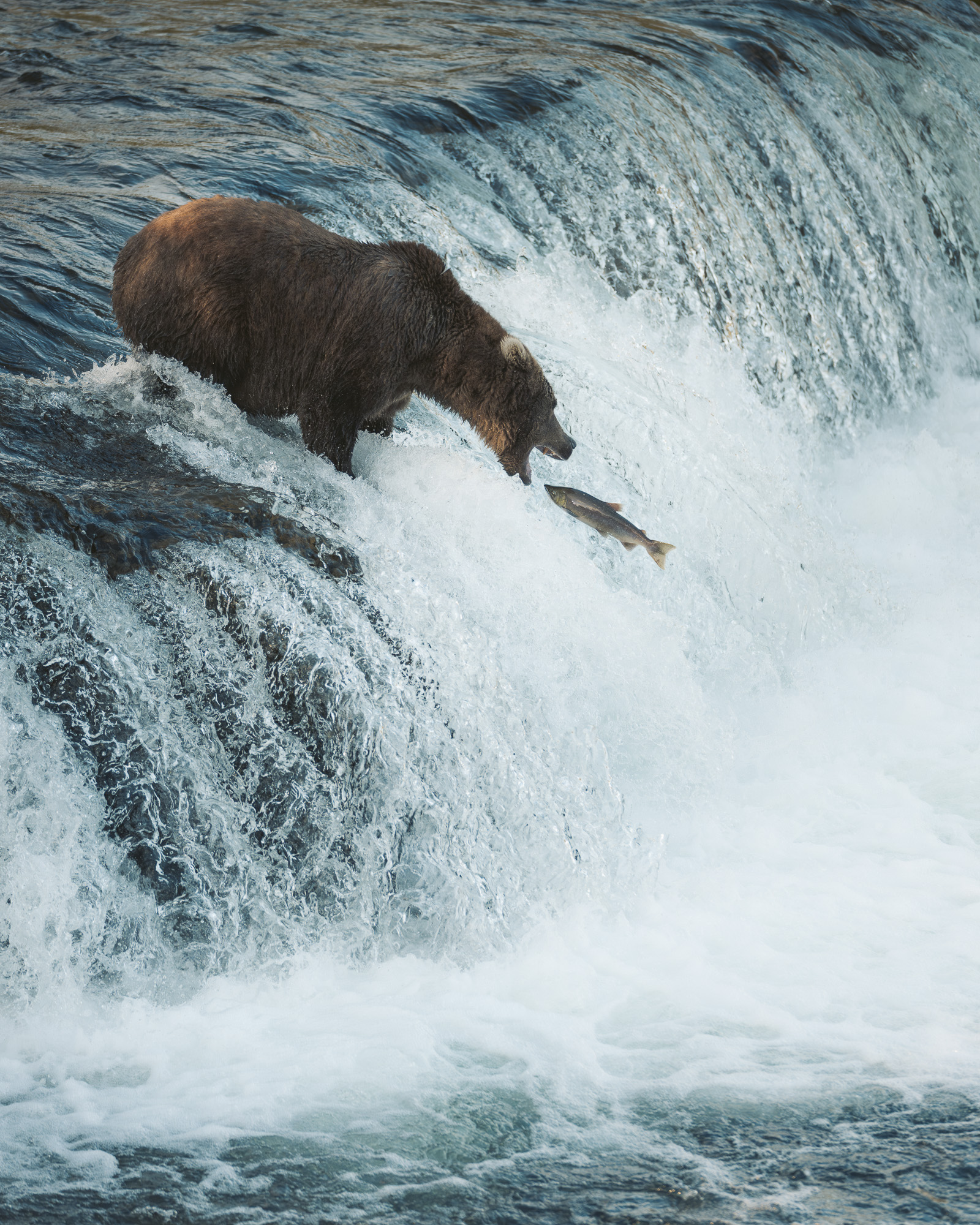
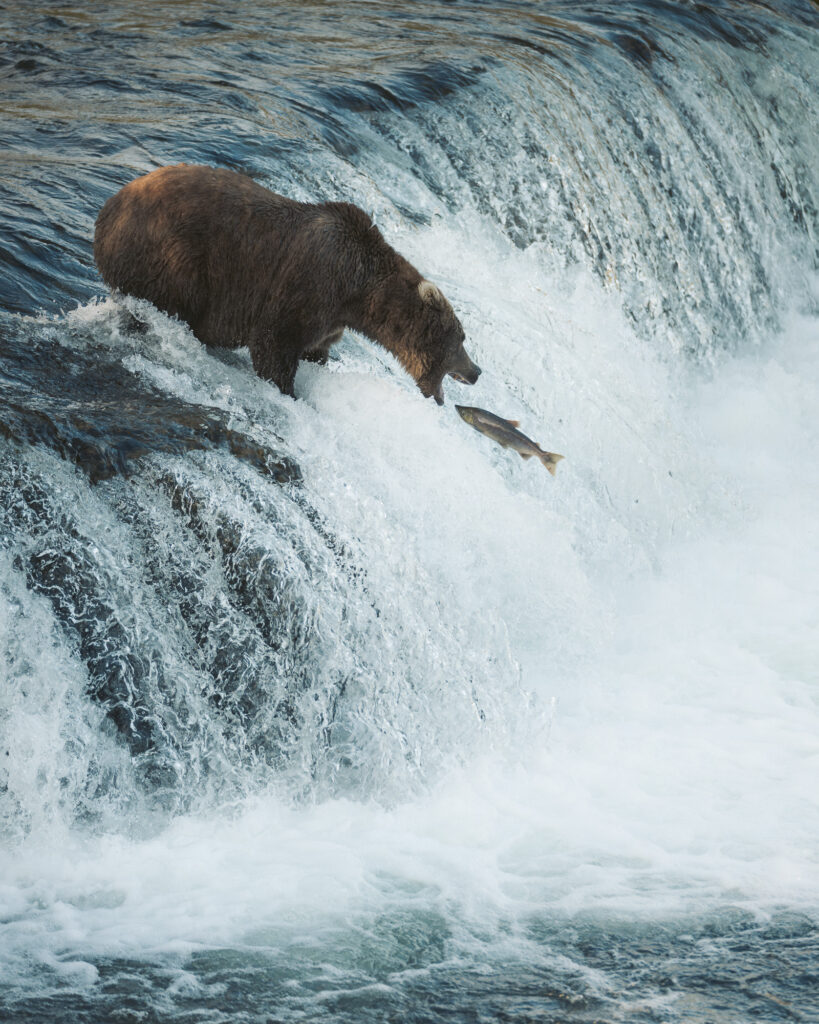
Brooks Lodge sits at Brooks Falls in Katmai National Park, the most photographed bear-viewing spot in Alaska. It’s the reason most people picture a bear snatching salmon out of mid-air when they think “Alaska bears.”
You can do Brooks Falls as a day trip too – fly in from Anchorage or Homer, watch for a couple of hours, fly back out. For a multi-night stay at the lodge itself, it’s a different process entirely: a lottery. Applications open 16 to 18 months out – the December lottery for a given year opens up dates for the season two years later. So a lottery entered in December 2026 is for summer 2028 dates.
Peak bear activity follows the salmon run, which clusters in late July through early September. Brooks Lodge itself operates roughly June through September each year – exact season dates shift slightly year to year, so confirm directly with Katmailand before you plan around it. As of 2026, a room at the lodge (sleeps up to 4) runs $1,260 a night plus a 6% bed tax. That’s about $1,335 a night all-in, or roughly $330 to $670 per person depending on how many of you share it. Meals come with the room. If your group is bigger than four, you’re booking more than one cabin.
What to know before you go bear viewing
A few things worth knowing before you commit to this one. During busy season, rangers limit platform time at Brooks Falls to 30 minutes per person. You can end up waiting a while for a spot, especially mid-day. Staying at the lodge helps here: you can go out in the early morning and evening, after the day-trippers have cleared out or before they’ve arrived. I went in early September, just past peak season, and never had to wait for a platform spot. Earlier in the summer, from what I’ve heard, the wait can be real.
No tripods are allowed on the platforms – monopods only. If you’re shooting video and want steady footage, bring one you know how to use; rangers will turn a tripod away.
Plan on walking, too. The round trip from the lodge to the viewing platform is about a 3-mile flat hike.
The cheaper alternative: Brooks Camp Campground
If Brooks Lodge isn’t in the cards, there’s also Brooks Camp Campground. There’s no lottery, just a reservation through recreation.gov by phone, online, or in person at the Brooks Camp Visitor Center. Booking windows open at 8am Alaska time, in chunks tied to your travel dates. January 7 opens May and June nights, February 7 opens July and August, and March 7 opens September and October. Peak season (June 1 through September 17) runs $18 per person per night; shoulder season drops to $10. You’re capped at 6 people per reservation, with a 7-night max in July and 14 nights total per calendar year. The campground holds 60 people with no assigned sites and no wait list – if it’s full, backcountry camping outside the developed area is the fallback.
Everyone goes through what’s locally called Bear School before heading out, whether you’re staying at the lodge, camping, or flying in for the day. It’s a roughly ten-minute safety orientation on how to behave around bears: a short video and a quick chat with a ranger, or a ranger talk covering the same ground. Rangers require it on every visit, no exceptions.
Remote fly-in lodges: the wild with a warm bed attached
I’ve stayed at Alaska Homestead Lodge, the sister property to Silver Salmon Creek Lodge, in the remote part of Lake Clark National Park. Similar lodges exist around Lake Clark, Katmai, and Kodiak Island, all offering some version of the same thing: fly-in bear viewing with real amenities at the end of the day.
Pricing depends heavily on how long you stay, since the nightly rate includes the flight in. The longer you stay, the lower the per-day cost. We booked 3 nights, lost the first to a weather delay, and stayed 2. All in, that worked out to roughly $800 to $1,000 per person per night for a 2- to 3-night stay.
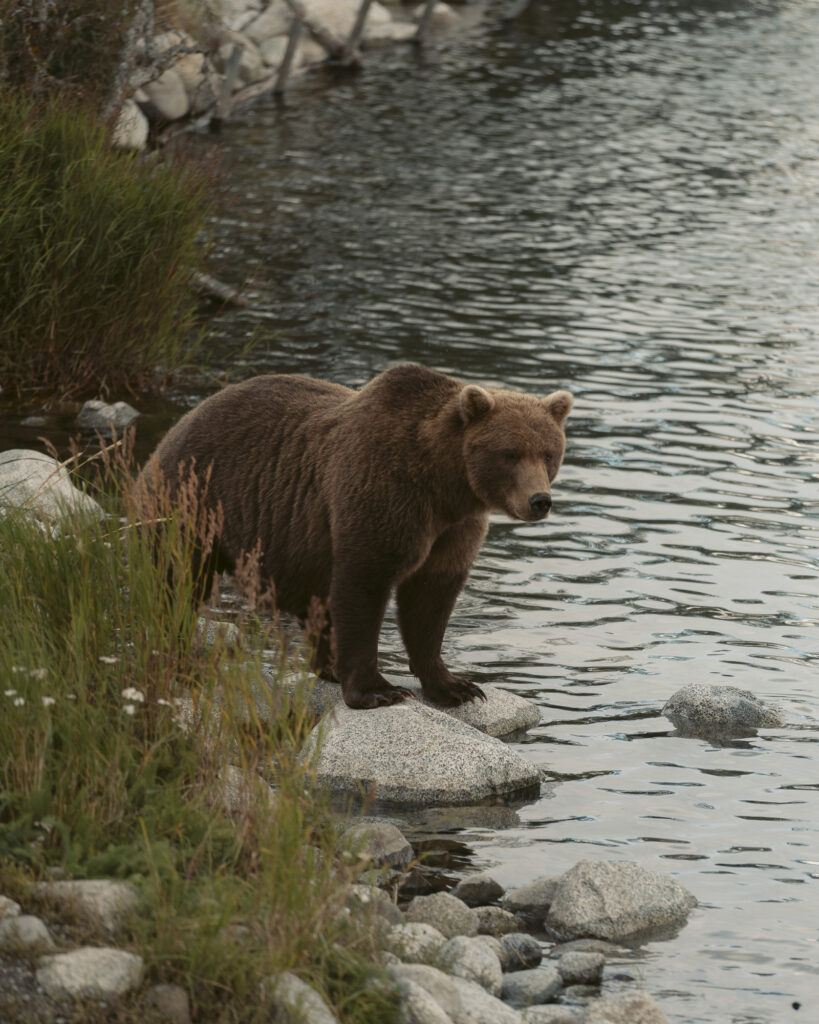
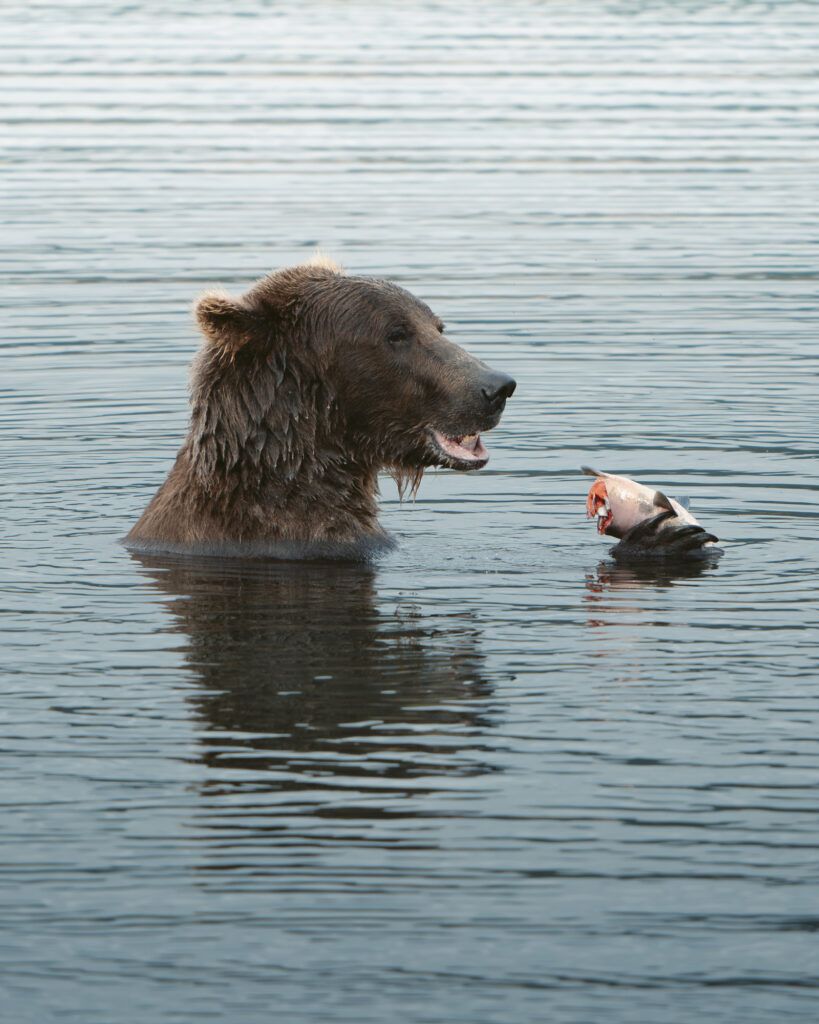
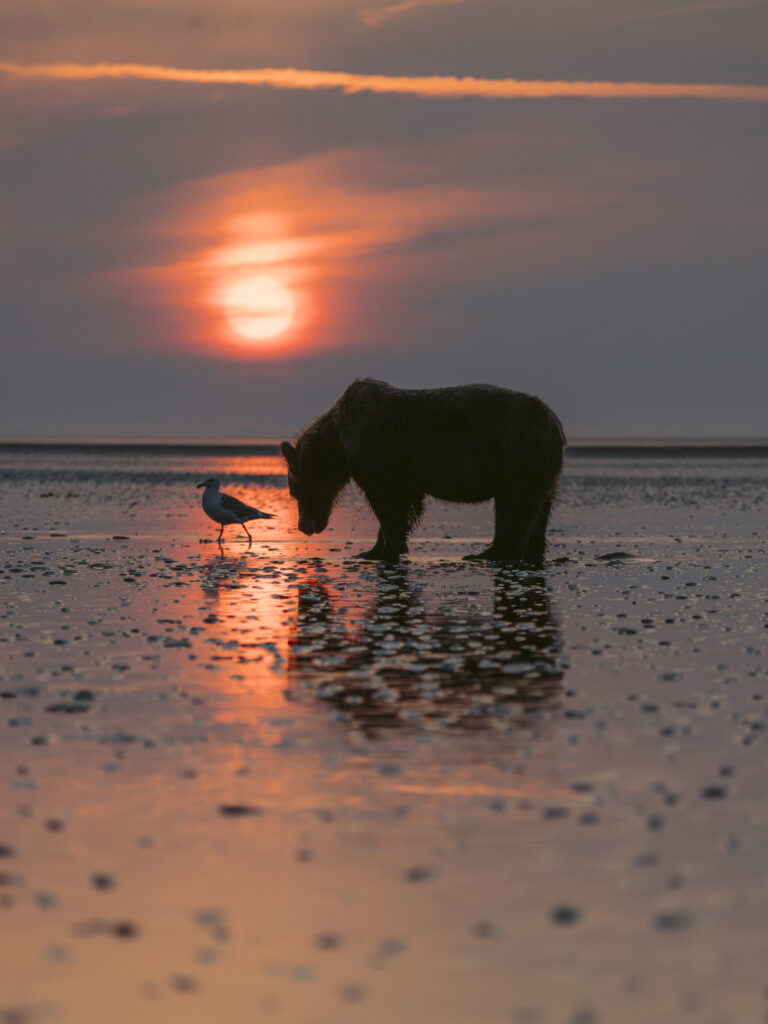
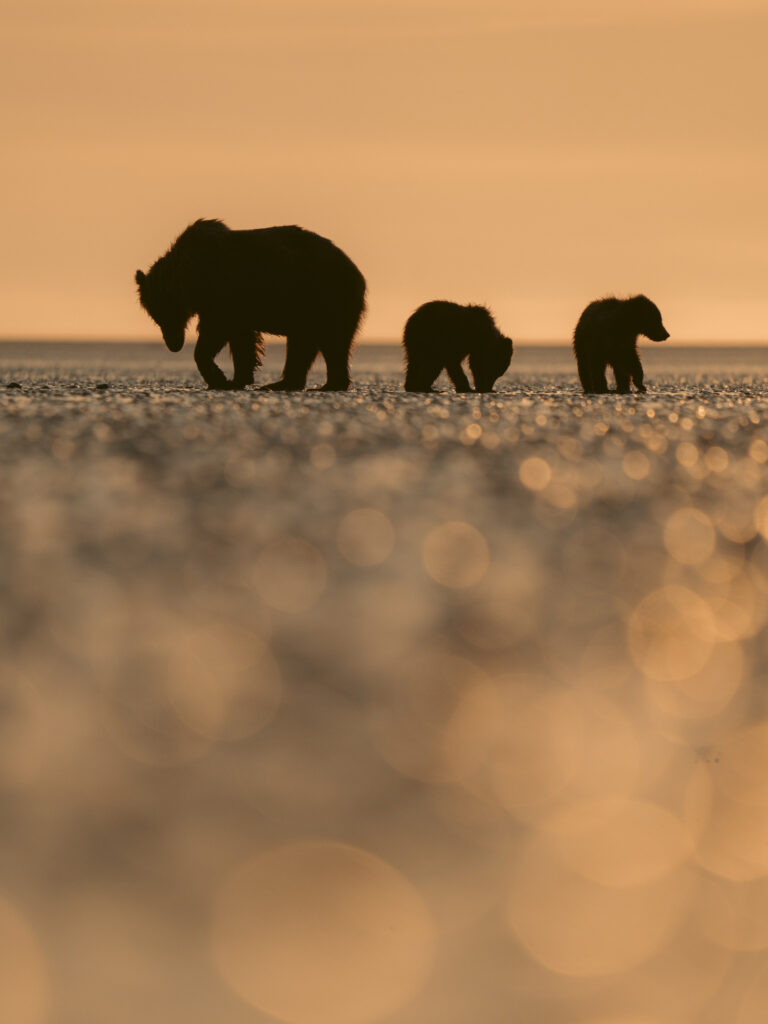
What you get for it: three home-cooked meals a day, a warm bed, and bears a few minutes’ walk away. Sometimes they wander right through the lodge grounds. Bears clamming at low tide are the big draw at both Alaska Homestead and Silver Salmon Creek. If you catch it at sunrise, it’s one of the best photo opportunities bear viewing in Alaska offers.
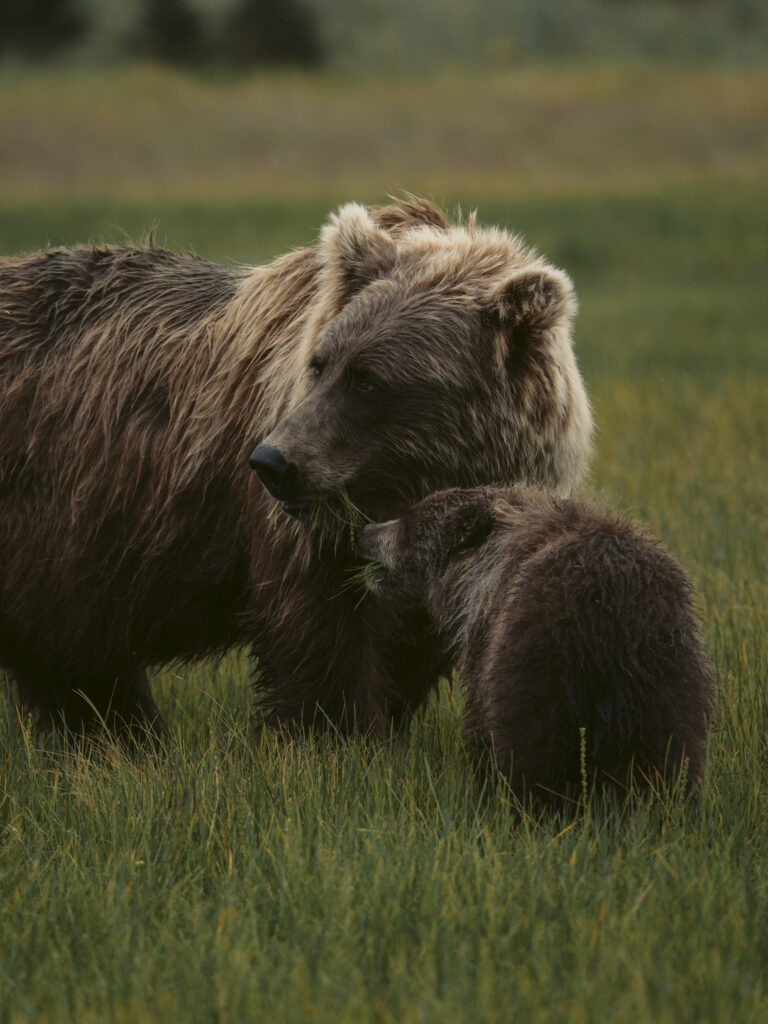
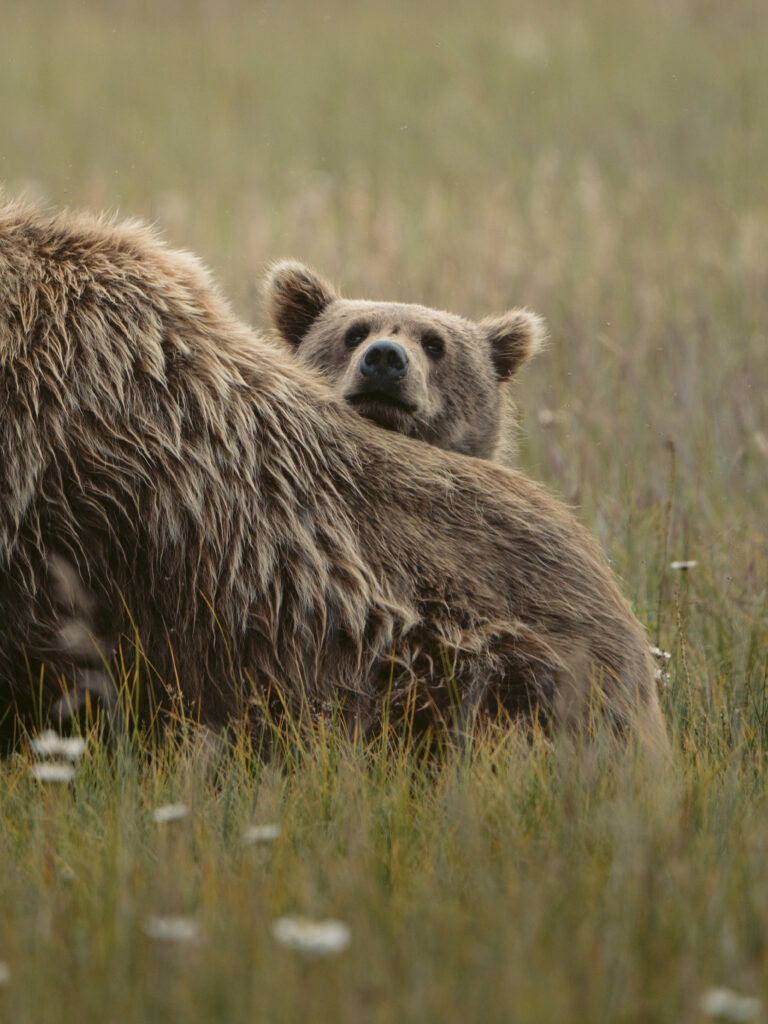
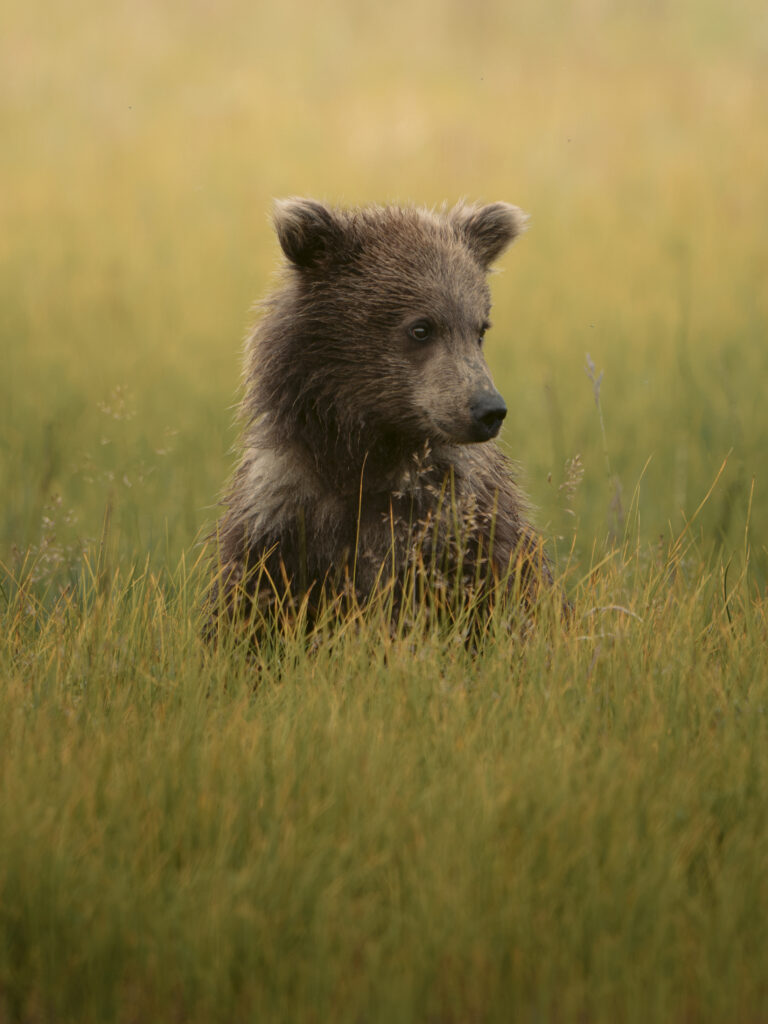
At both lodges, you’re typically in a group of 4 to 6 people for the day. You head out for a morning session, come back to the lodge for lunch, then go out again in the afternoon. ATV wagons move you between viewing areas so you’re not trekking for miles, though there’s still real hiking involved getting from the dirt roads into the grasslands where the bears are. Every outing we went on, we saw bears, including a fair amount of cub activity, and the guides knew the area well.
The downside: weather delays
The honest downside, and the one thing that can derail a trip like this: weather. We lost a full day because the lodge couldn’t fly in or out. They had no open dates left that season, so there was no way to add a day back on the end. I hadn’t gotten travel insurance for this trip, and that turned out to be the real mistake. We didn’t get the lost night back, and we had to scramble for a last-minute, expensive hotel in Anchorage on top of it. Most of these lodges have policies covering weather delays, both if you’re stuck at the lodge and if you can’t fly in at all. Read them closely before you book, and get travel insurance regardless. Weather is the one thing none of us control.
Bear Camp: the most remote, most unfiltered version
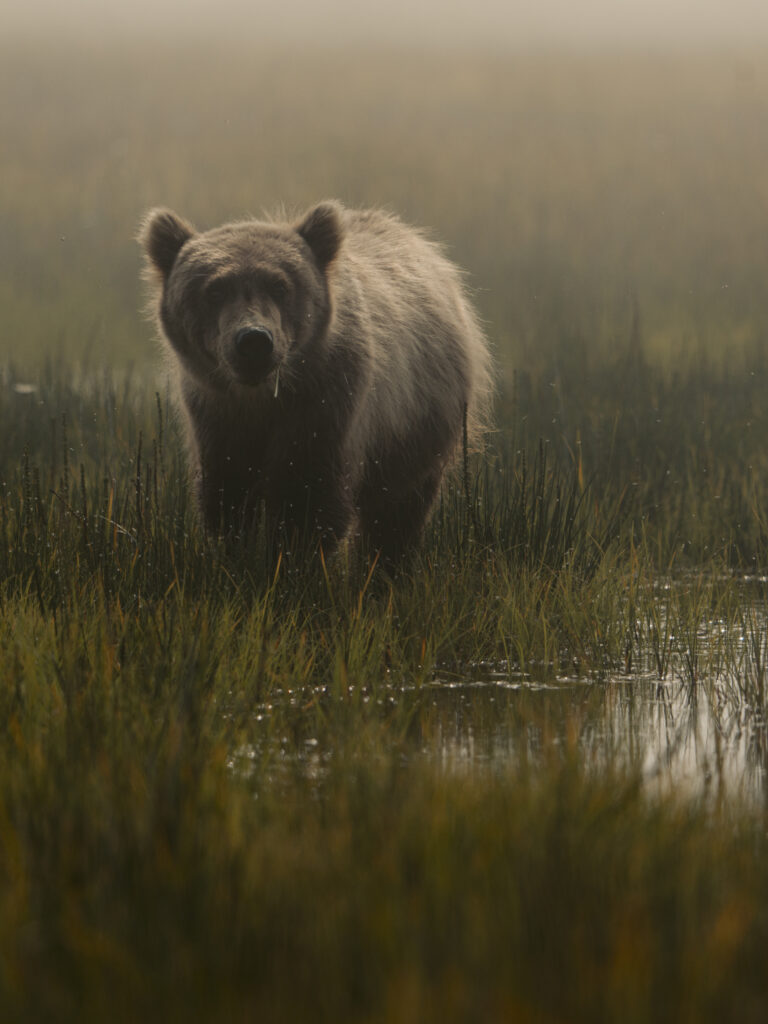
The last category is its own thing entirely – true backcountry camping in bear country. I only know of a handful of outfitters who run this, and the one I went with was Scott Stone’s Katmai Bear Camp, part of his Alaska Bear Camps operation.
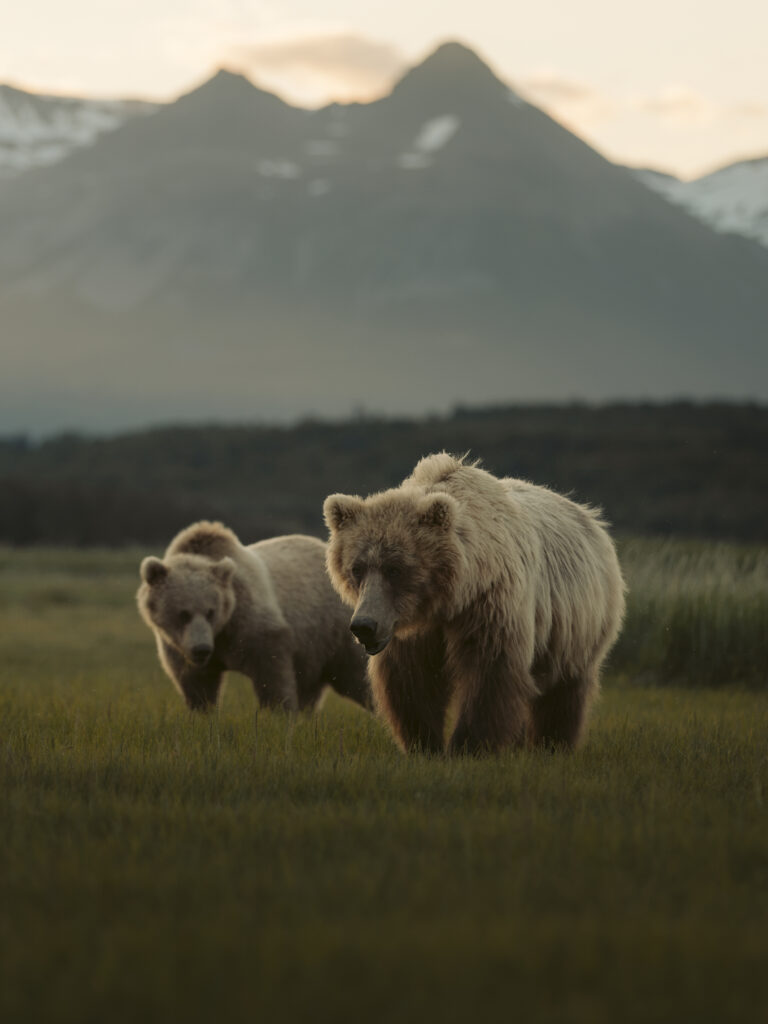
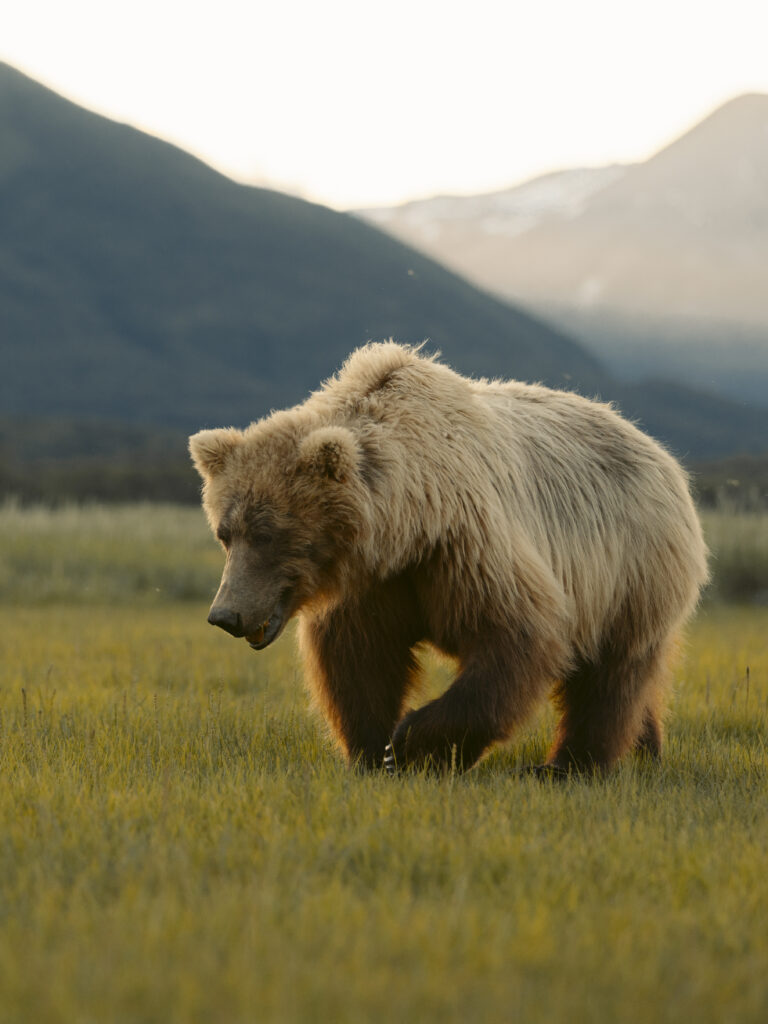
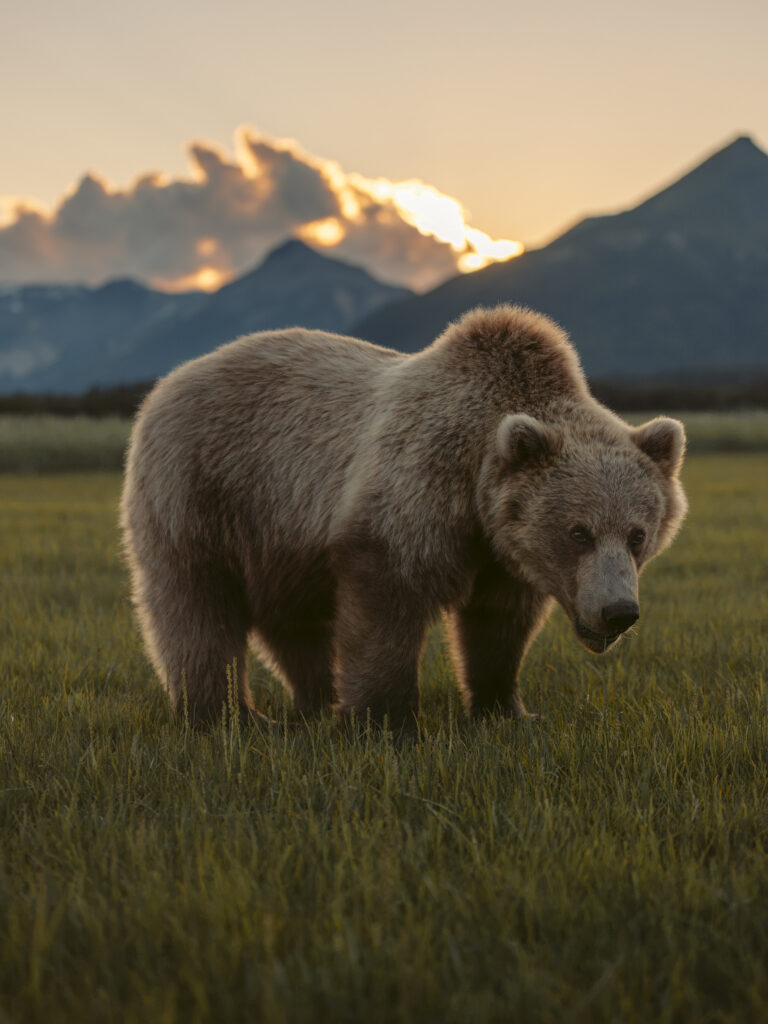
Scott runs 4- to 5-night trips straight into the Katmai backcountry. It’s remote enough that we only saw the occasional day-trip plane overhead, and we never crossed paths with another group on the ground. No crowds, no other boats at the encounter, nobody else at all.
This is not a lodge with beds swapped for tents. It’s real camping: sleeping in tents, using a portable camp toilet, and eating freeze-dried meals three times a day, since there’s no setup for actual cooking out there. Scott provides the gear. There’s Starlink and solid solar power for charging batteries, but no showers, for the full length of the trip.
Scott’s been guiding here for over a decade and reads bear behavior better than anyone else I’ve met in Alaska. He is the best – which matters, because it’s what keeps a trip like this safe. The bears in that stretch of backcountry are habituated to having people around, so it never felt unsafe. He also runs trips to see wolves elsewhere in Alaska, if you’re looking for another kind of wild adventure.
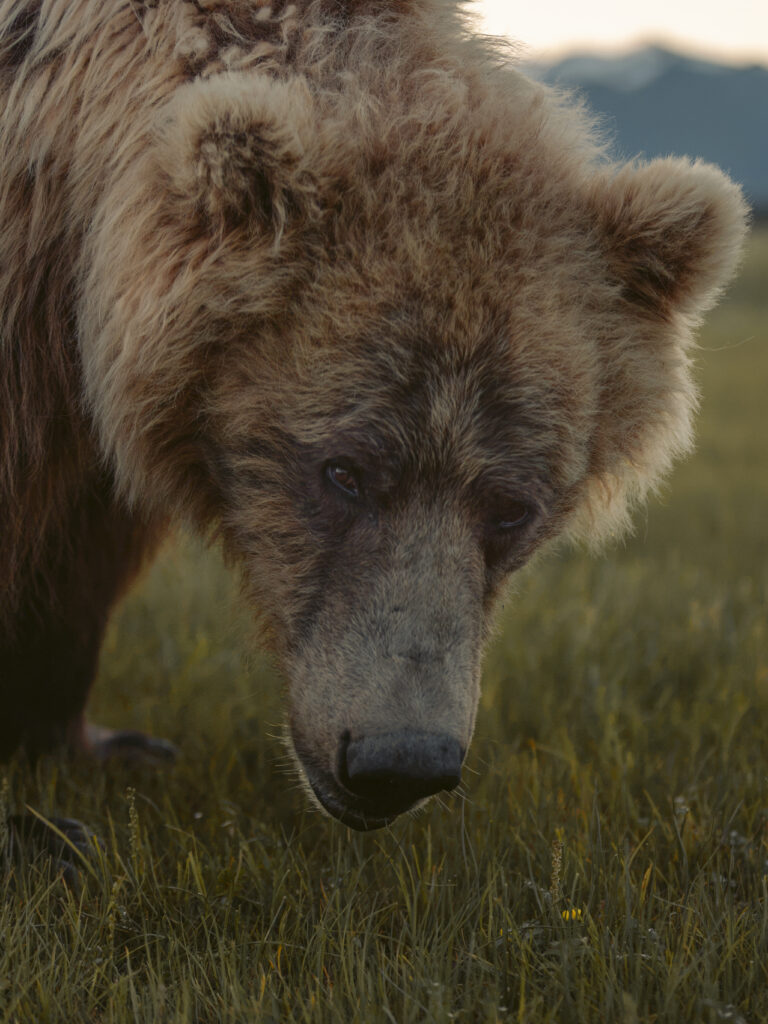
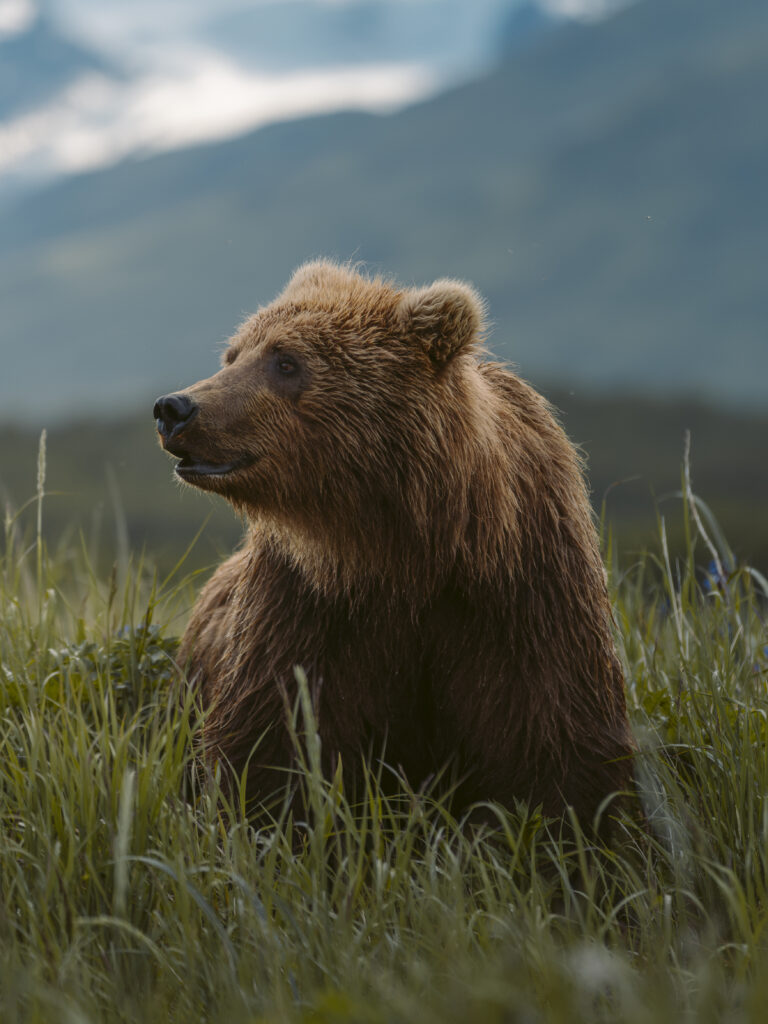
Of the four, Bear Camp was my favorite, by far. Five days without a shower and freeze-dried meals the whole time is a real trade-off – I’d take it again without hesitation, given what we saw.
The thing that can derail any Alaska bear viewing trip: weather
Every fly-in option on this list – day trips, Brooks Lodge, remote lodges, Bear Camp – comes with the same risk. Weather grounds planes in Alaska more often than people expect. When it does, there’s rarely a way to make up the lost time, especially in peak season when everything’s full.
Get travel insurance. It’s the one piece of advice from this whole post I’d put above the rest. Read your lodge or operator’s weather policy before you book, and know what you’re covered for if a flight doesn’t happen.
Which Alaska bear viewing trip is right for you
It comes down to what you’re after.
Want the purest wild encounter, with as few other people around as possible? Bear Camp is the one. Want to see bears in the wild without giving up a warm bed and a home-cooked meal? A remote fly-in lodge is the better fit. Want the exact shot you’ve seen in National Geographic – a bear plucking salmon out of the air at Brooks Falls? That’s Brooks Lodge.
Whichever way you go, you’re not losing out. Each one has its own quirks, and knowing them going in is most of the work.
I made a separate gear guide covering what I’d bring for Alaska bear-viewing photography. It includes my camera setup, monopod, what to wear for the weather, and the stuff I didn’t think to pack until I was out there.
— · —
Sent from somewhere wild.
Leave a Reply


