


Namibia: why I keep going back (seven trips and counting)
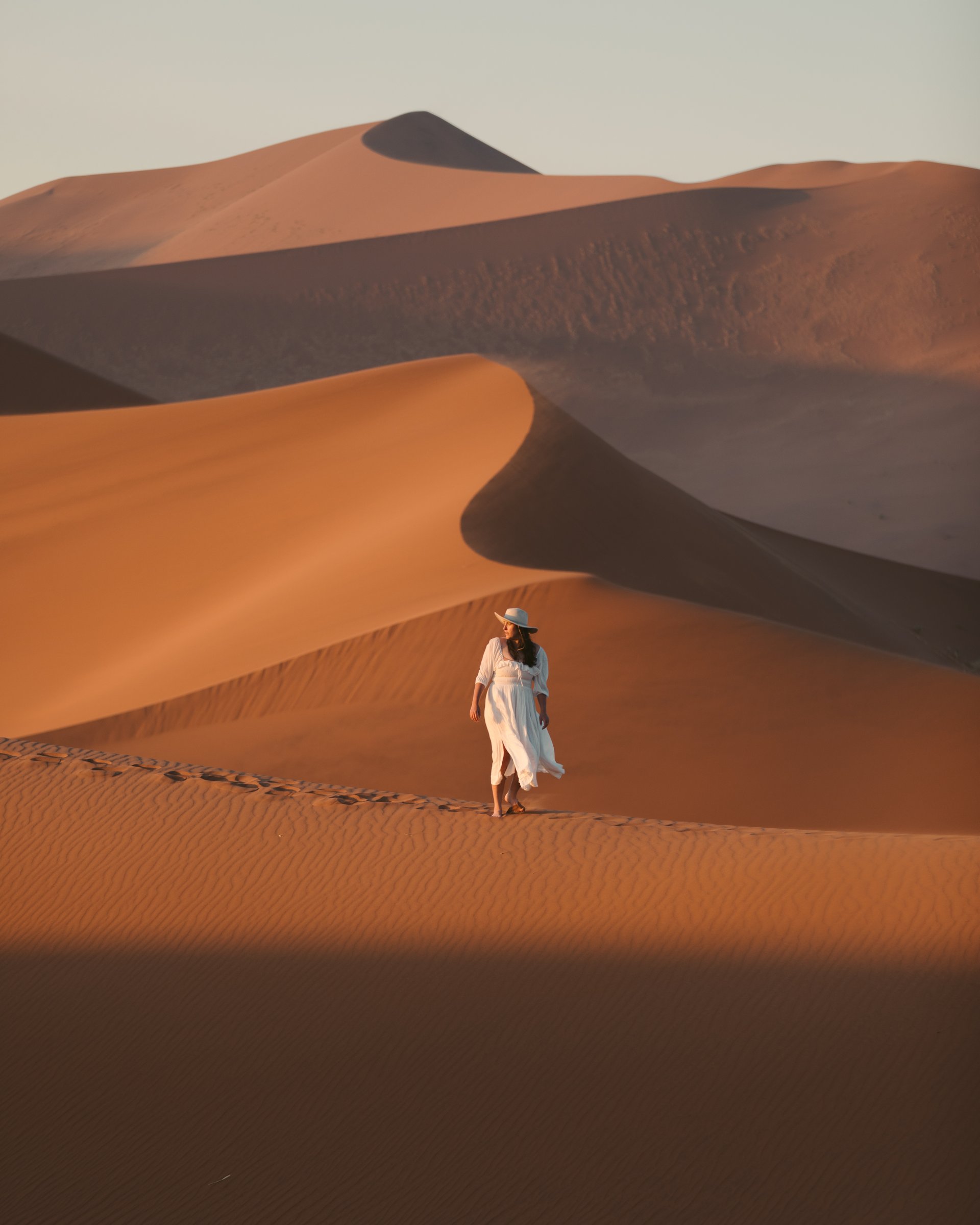
May 16, 2026
POSTMARKED WILD : FIELD DISPATCH
filed under:
POSTMARKED WILD : FIELD DISPATCH
< journal home
Heads up: some links are affiliate links.
Before I could pick up a camera — before I was even born — my parents lived in Africa. For most of the 1980s they were based in Botswana, moving through Zimbabwe, Liberia, and wherever else caught their attention. I grew up with the evidence of those years all over our house. Film photos of wildlife on the walls. Hand-carved wooden and stone sculptures from village visits. Woven pieces they’d carried home from the road. Africa was never abstract to me. It was always this thing I was going to get to someday.
The country that finally pulled me in was Namibia. About five years ago I started seeing images from it online — vast sand dunes, surreal landscapes, the kind of light that makes you wonder if someone edited reality. I was following two photographers I admired, Emilie and Jason Charles Hill, and they announced a group trip. The stars aligned. I had time off work. I signed up. That was trip one.
Seven trips later, I still can’t stay away.
What that first trip covered
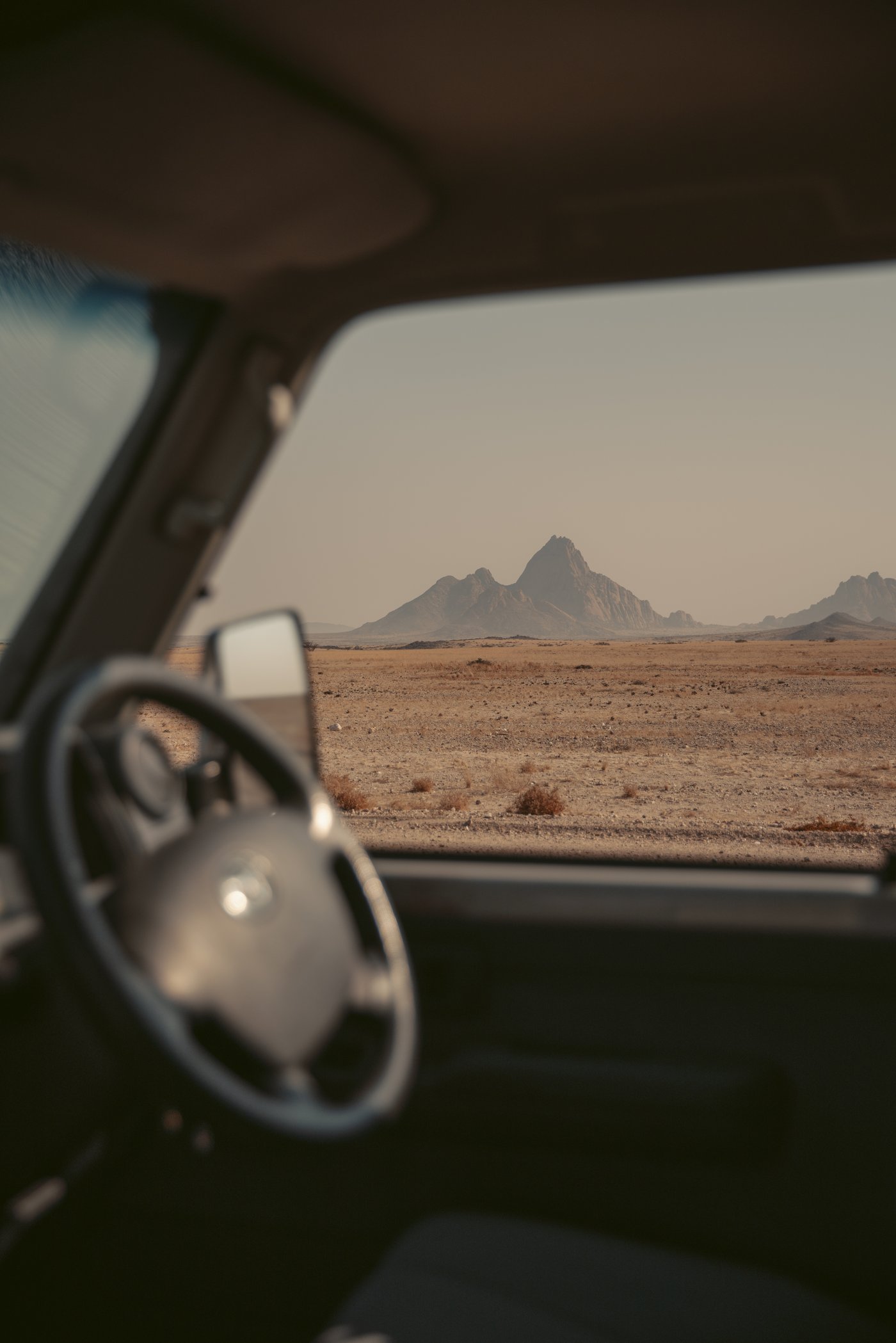
We started in Windhoek, drove over to Sossusvlei, and spent a few days there — including a helicopter flight over the Sossusvlei dunes that I was not prepared for. Then Swakopmund and the Atlantic Ocean. Then east to Spitzkoppe, where massive granite boulders rise out of flat desert in a way that looks genuinely impossible. From there, north to Etosha National Park, followed by time at a private game reserve.
That itinerary covered most of what Namibia is known for: dunes, coastline, desert mountains, wildlife. It also cracked open two obsessions I’ve never recovered from.
Why Namibia is worth your time
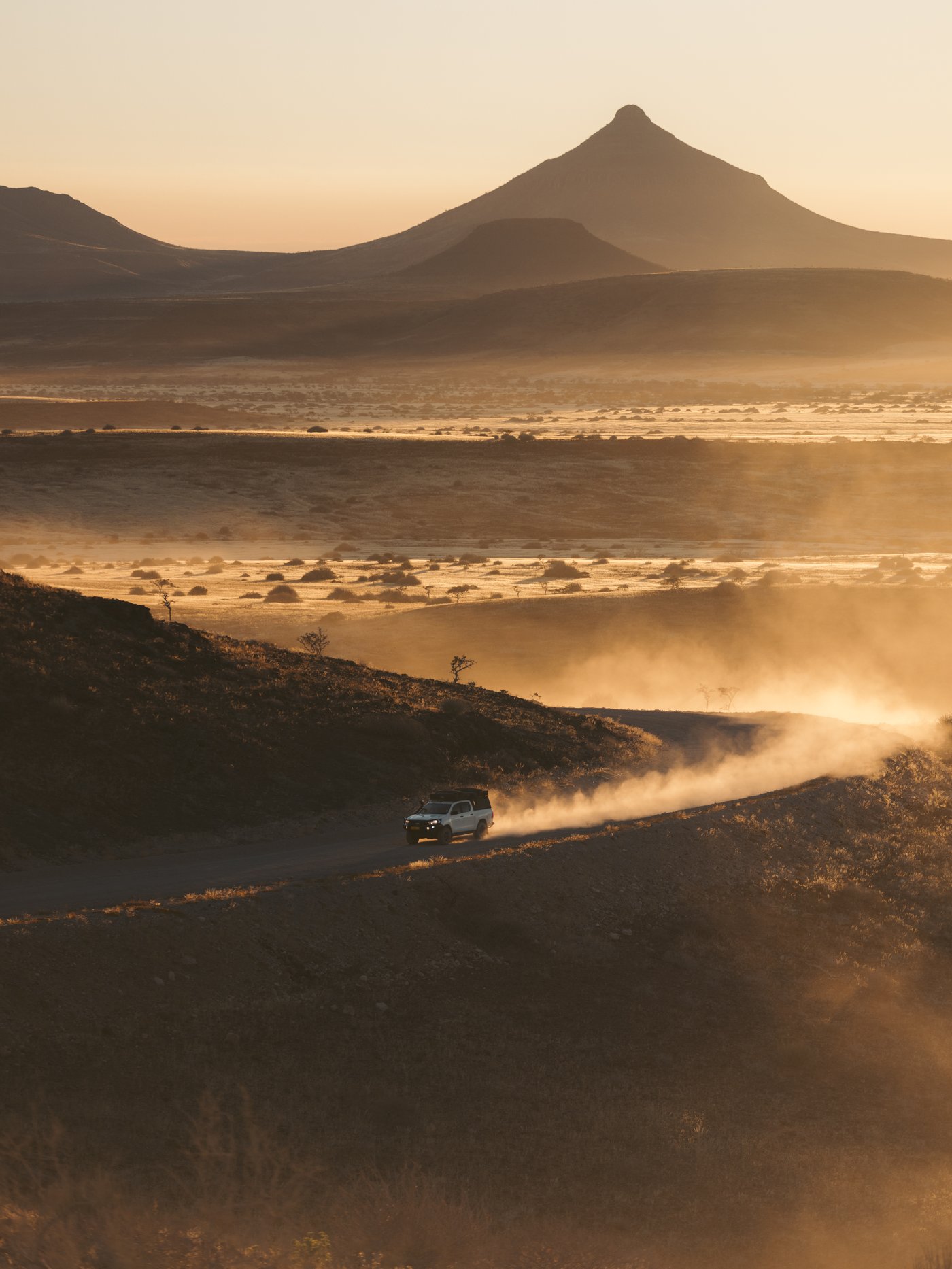
The scope of the country is the first thing that gets you. You can rent a car and road trip through most of it. Some routes need a high-clearance four-wheel drive — I’ve learned that the hard way — but if you’re comfortable on dirt roads, you can navigate a serious portion of this country independently. There are stretches where you’ll drive for two, three, four hours without seeing another car.
The night sky is something else. Namibia has some of the darkest skies in the world. If you’ve never seen the Milky Way with no light pollution, this is where you’ll see it.
It’s also the kind of place that swallows time. I once spent an entire week in Sossusvlei alone and didn’t run out of things to shoot or see.
Sossusvlei: a photographer’s playground
You’ve seen Deadvlei — the red dunes, the cracked white clay pan, the skeletal acacia trees. That image became a Windows screensaver for a reason. It looks exactly like that in person, and it doesn’t get old.
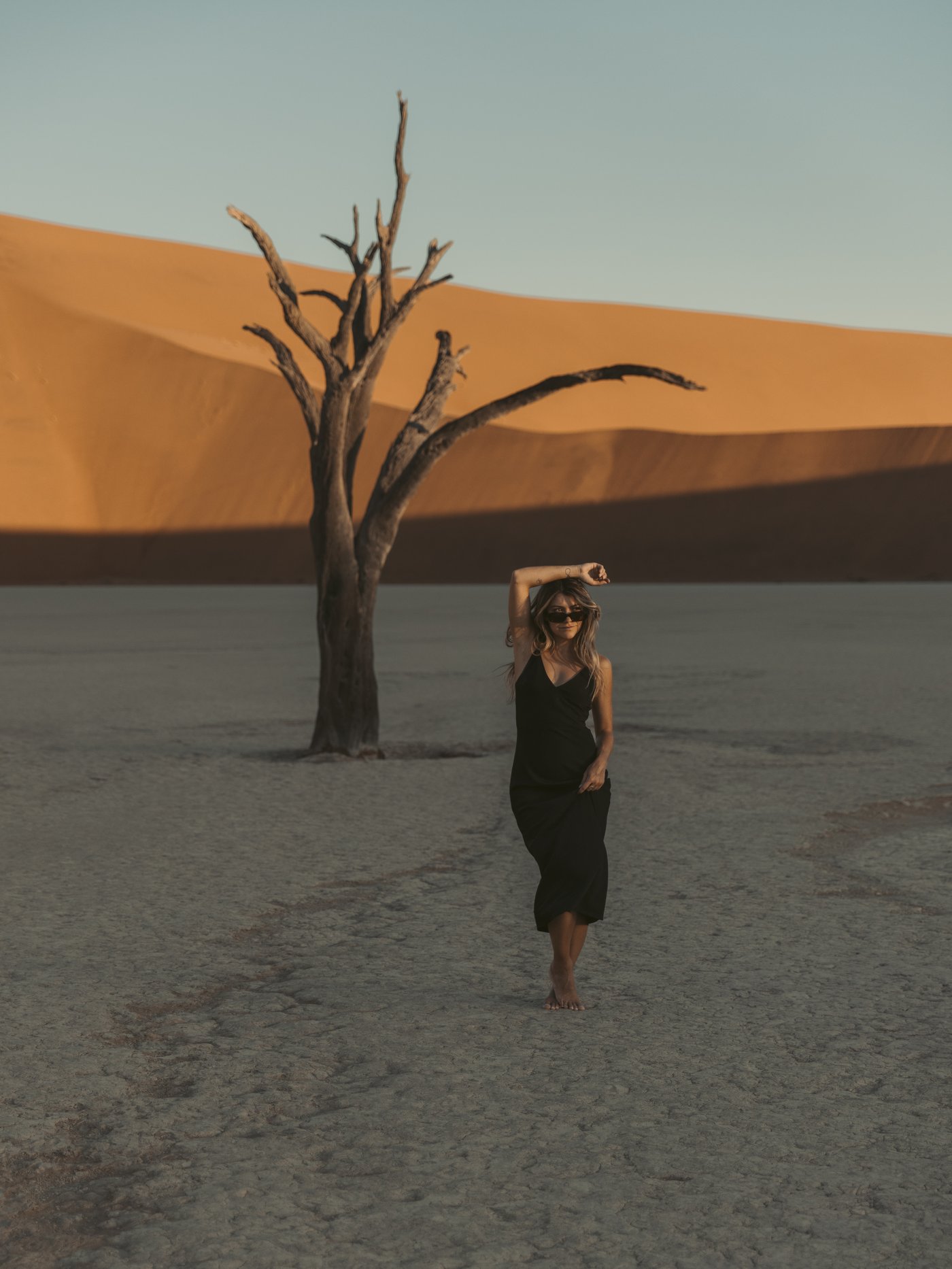
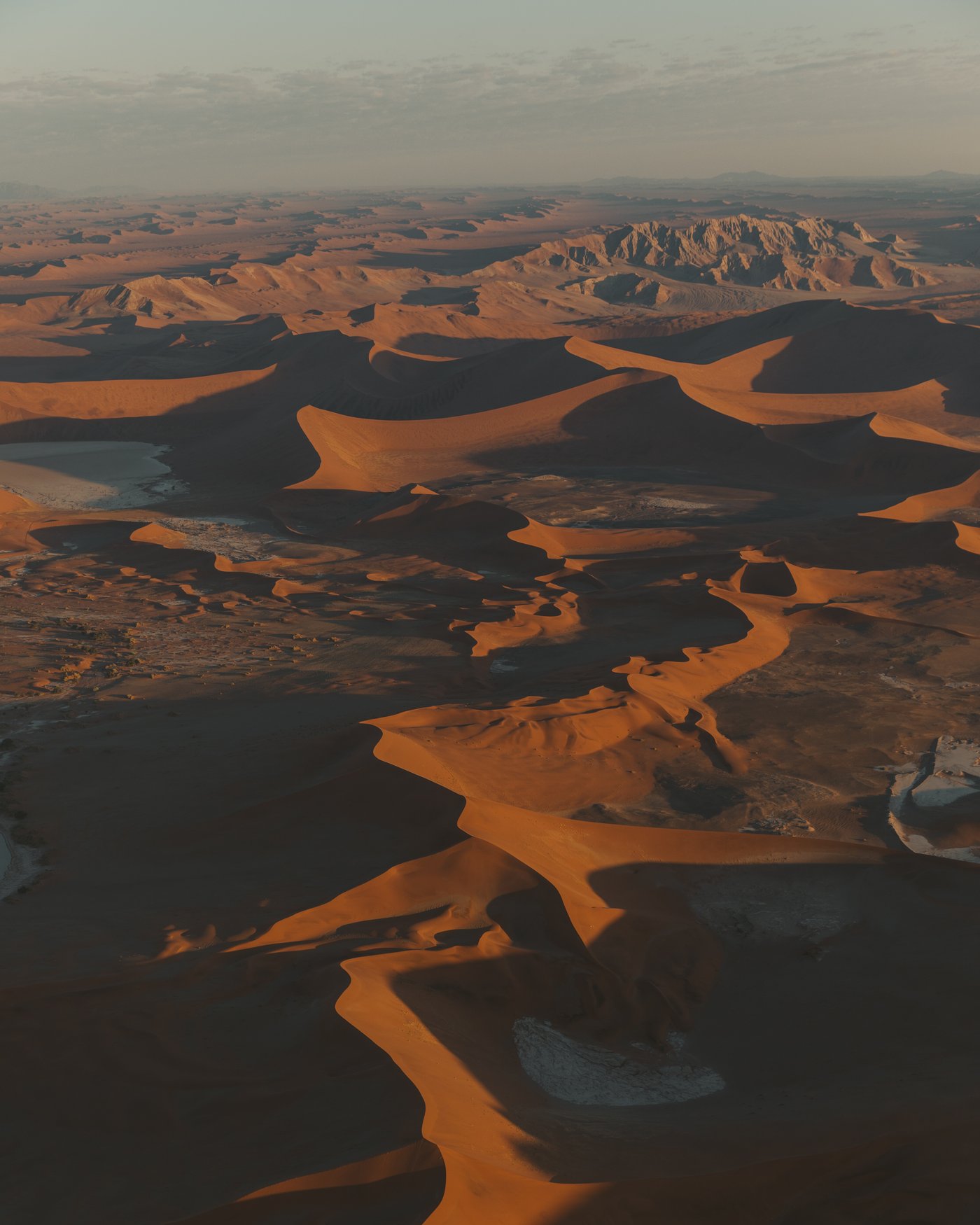
Sossusvlei is somewhere I keep returning to because it always delivers. The dunes are among the tallest in the world. The light shifts dramatically from pre-dawn through midday. Wildlife passes through. You can hike the dunes, study compositions from the pan floor, and still not feel like you’ve exhausted it after days of trying. Most famous places disappoint when you see them up close. Sossusvlei doesn’t.
Etosha and how safari changed everything
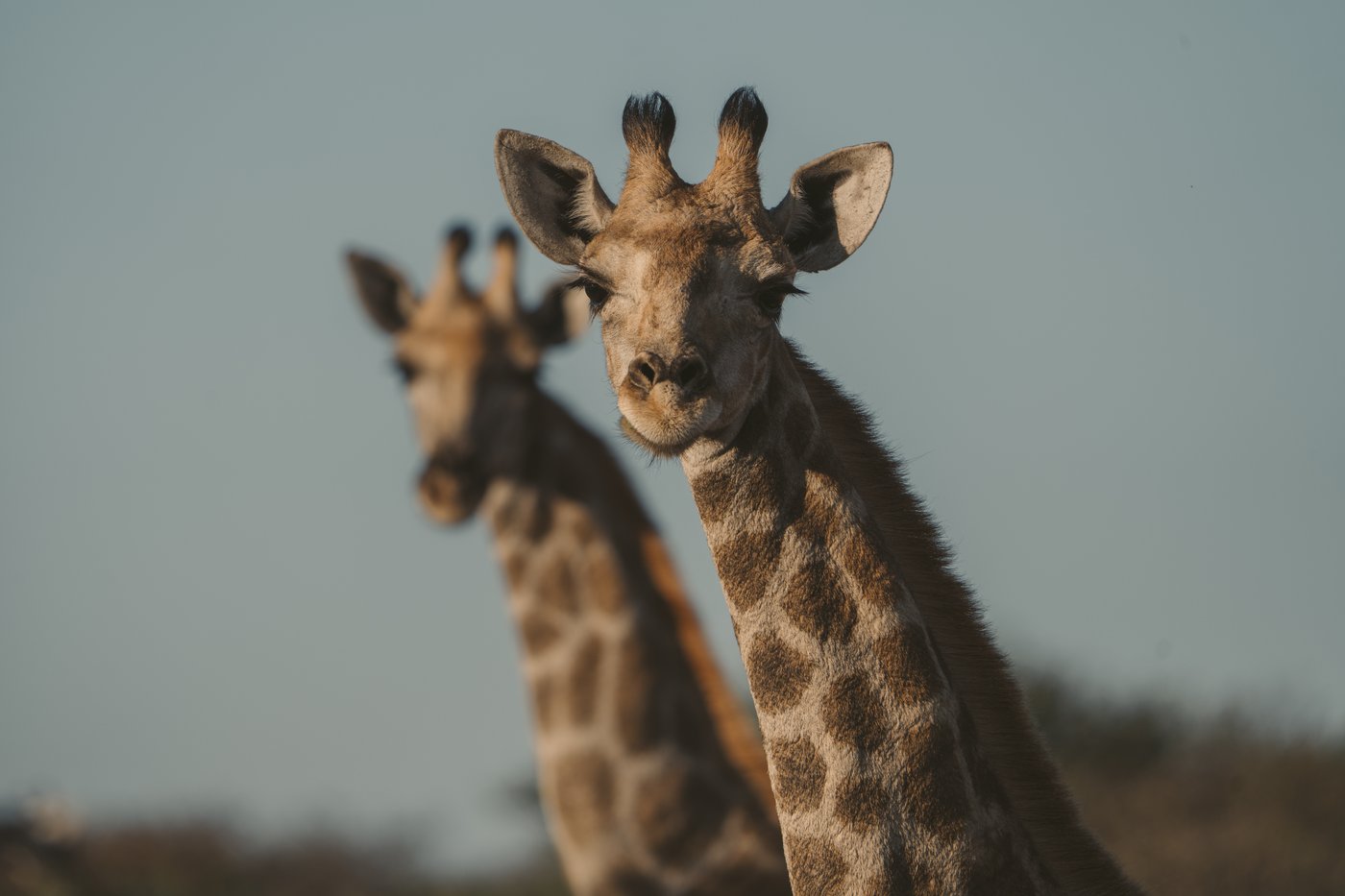
Here’s where I have to be direct: going on safari in Etosha is why I became obsessed with wildlife photography. I’m a veterinarian. You’d think animals would feel familiar. Instead, getting out there with a camera dismantled every assumption I had.
Etosha sits alongside one of the largest salt pans in the world — big enough to see from space — and watching animals move along the edges of that white expanse is unlike anything I’ve seen anywhere else. The park lets you self-drive, so you don’t need a guide to experience it, though guides are worth every penny.
What got me wasn’t just the animals. It was the process of tracking them. Watching a guide read the ground for fresh prints, listen to birds, read the behavior of nearby animals to triangulate where something might be. You use all your senses, and no two days look the same out there. That unpredictability is still what pulls me back. Getting to experience that on my first trip to Namibia opened a door I had no idea was there.
The people
This will sound like something you put in a brochure, and I’m saying it anyway: Namibians are some of the kindest people I’ve encountered anywhere. Before my first trip, I mentioned on Instagram that I was going, and strangers DMed me excited that I was coming to see their country. That warmth wasn’t just online. Every person I’ve met along the way — guides, guesthouse owners, people we stopped to talk to on the road — has been generous with their time, their knowledge, and their genuine enthusiasm for showing people what Namibia is.
That’s not a small thing. It’s probably the main reason I keep returning.
How Namibia started the Survey Party
That first group trip, organized by Emilie and Jason, showed me what a well-run expedition feels like. The right people, the right itinerary, access to places you wouldn’t find on your own. I came back wanting to create that experience for others.
That’s where the Survey Party came from. I started thinking about what a good guide actually looks like, what makes an itinerary curated rather than generic, how to show someone the best of a country without just hitting a tourist checklist. Namibia was the proving ground for all of it. Without that first trip, the Survey Party doesn’t exist.
What I shoot with in Namibia
If you’re going with a camera, here’s what’s in my bag:
- Shimoda Action X40 V2 Women’s Kit — the best photography bag
- Sony A7RV — My go to body for photographing wildlife
- Sony FE 200-600mm f/5.6-6.3 — the wildlife lens; non-negotiable
- Sony 70-200mm f/2.8 — landscapes and closer encounters
- DJI Mini 5 Pro — drone, worth every ounce
- Lens cleaning kit — the dust is real and relentless
Once Namibia gets under your skin, it stays there. That’s not a slogan — it’s just what happens. The sand, the silence, the skies, the animals, the people. Seven trips in, I’m still finding new reasons to go back.
A full Namibia travel guide is coming — places to stay, how to plan the road trip, what to book in advance, and what to leave open. I’ll link it here when it’s live.
If you want to experience Namibia as part of a small group, The Survey Party is my group expedition series — built around the idea that the best way to see a place is with the right people and someone who’s already made all the mistakes. Namibia trips coming oh so soon!
Heads up: some links in this post are affiliate links. I make a small cut if you buy — no extra cost to you, and I never link anything I wouldn’t use in the field.
Leave a Reply


