


Baja: six trips in, and the Sea of Cortez keeps pulling me back
May 19, 2026
POSTMARKED WILD : FIELD DISPATCH
filed under:
POSTMARKED WILD : FIELD DISPATCH
< journal home
I went to Baja the first time because of Instagram. I’m not too proud to admit it — I get sold to by social media like everyone else. Six trips later, I’m not planning to stop.
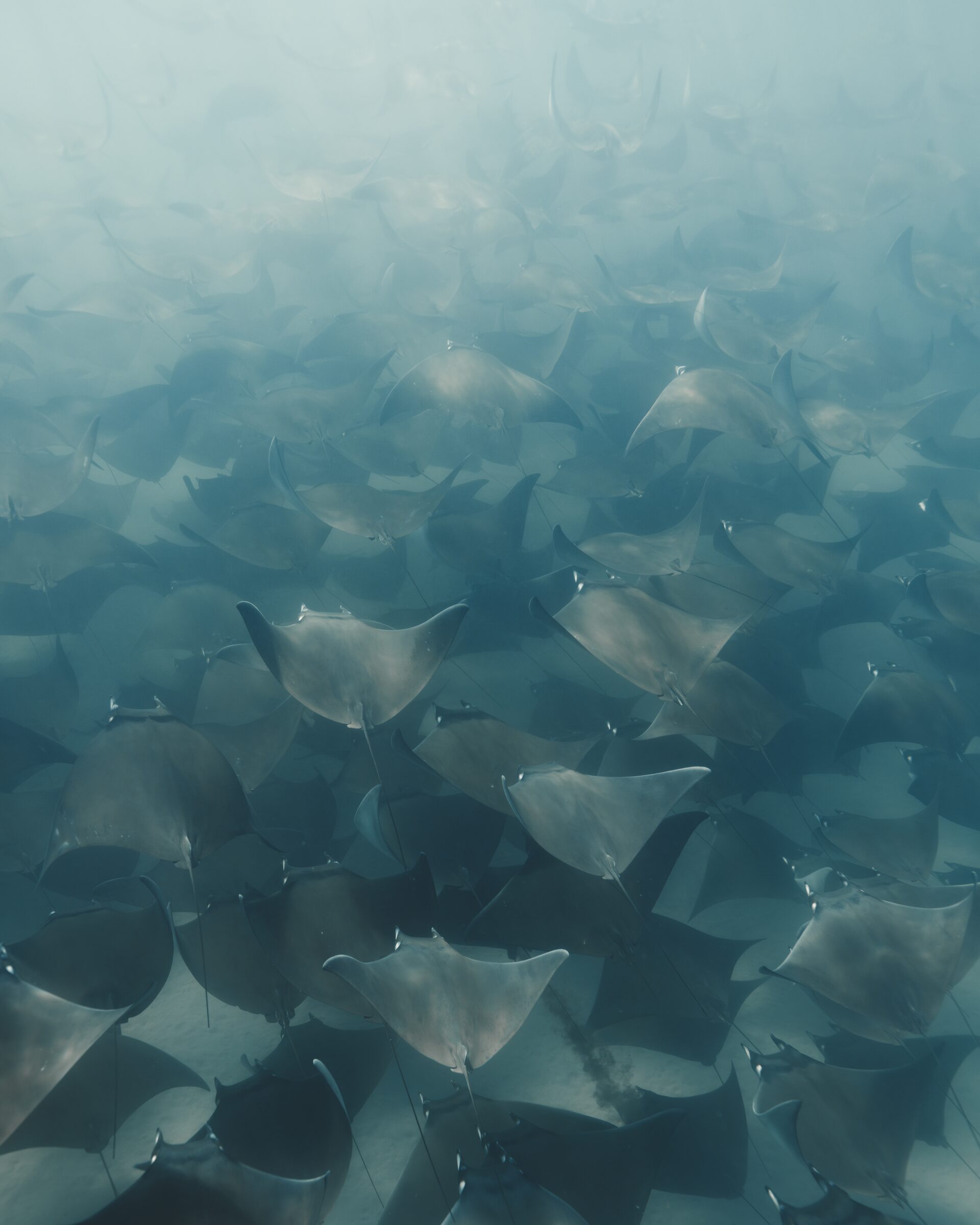
Jacques Cousteau called the Sea of Cortez “the aquarium of the world,” and the phrase does more work than it should. No two days on the water are the same. You’ll sit on a panga for five hours seeing nothing, then have forty-five minutes of pure chaos when you cross paths with a fever of mobula rays the size of a city block. It goes from zero to sixty fast.
What draws people here: the megafauna, the desert-meets-ocean landscape, and the Cerralvo Channel funneling fish and predators into a corridor you can actually access. You can be in the desert eating tacos at lunch and on the water with whale sharks by sunset.
The Cerralvo Channel is the part most visitors don’t realize is doing all the work. It’s a deep-water passage between Isla Cerralvo (now officially Isla Jacques Cousteau) and the Baja peninsula, and the depth plus the currents pump nutrient-rich water through the area year-round. That’s why the wildlife concentrates here in a way it doesn’t elsewhere in the Sea of Cortez.
And let’s set the expectation upfront: these ocean safaris are out on open water, buzzing around on a small panga — this is definitely not a calm bay snorkel. That’s the whole point. It’s also a lot.
What you’re actually here for: mobula rays
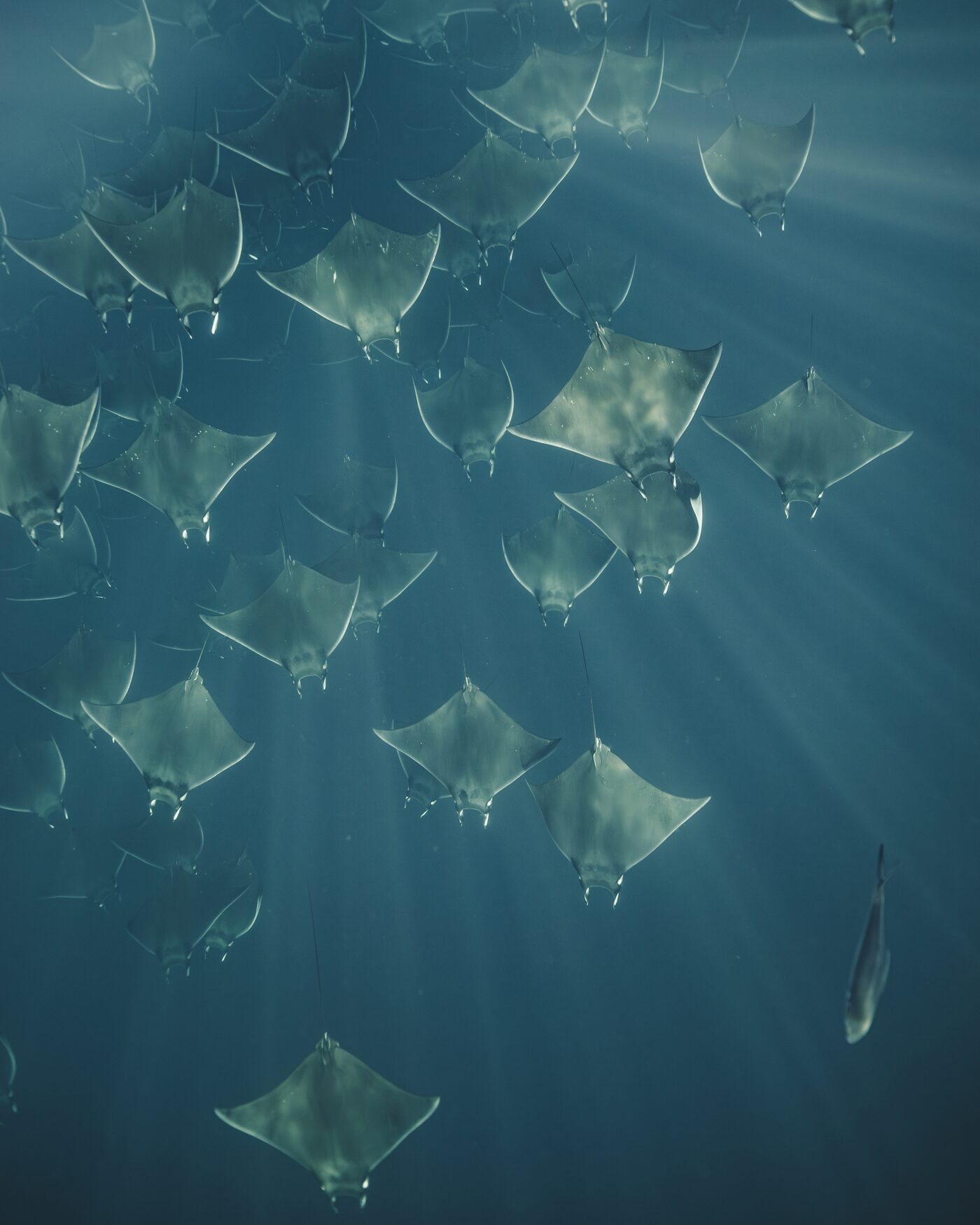
The animal that pulls most people to La Ventana is the Munk’s devil ray (Mobula munkiana). It’s a smaller cousin of the giant manta — wingspan around three to four feet, not the twenty-foot creature you might be picturing. What makes them remarkable is how they aggregate. Tens of thousands of rays move together in a single “fever” that sometimes stretches past the horizon.
They reproduce slowly, one pup every one to three years, which is why they’re listed as a species of concern by the IUCN. That changes how you should show up: small operators, careful approaches, no chasing.
When a fever is below you, the water changes color. Blue turns to a bruised shadow moving across the surface. You see it before you see the rays themselves. And then, for reasons nobody fully understands, they’ll leap out of the water (literally — ask the scientists, they have no clue. Lots of theories, but no real answer). Locals hilariously call them flying tortillas.
Peak season runs late May through early June. A smaller mini-season runs November through January.
What you’ll actually see (and what nobody promises)
Most days you’ll see mobulas, though not always in the city-block-size numbers. You’ll see dolphins — bottlenose, common, spinner, rough-toothed, occasionally pantropical spotted — in pods that range from a handful to thousands. Sea lion colonies on the nearby islands. Sea turtles, marine birds, reef fish. Visibility usually sits between 15 and 30 metres.
What’s possible on any given day is the part that gets people. Whale sharks pass through seasonally and sometimes linger. Humpback, blue, fin, Bryde’s, sperm whales. Pilot whales and false killers. Orcas, occasionally. Oceanic mantas, the bigger cousins. Beaked whales most people have never heard of — Cuvier’s, Baird’s, pygmy, Peruvian. Silky, mako, hammerhead sharks too (depending on the time of year).
No operator can guarantee any of it, and anyone who does is lying.
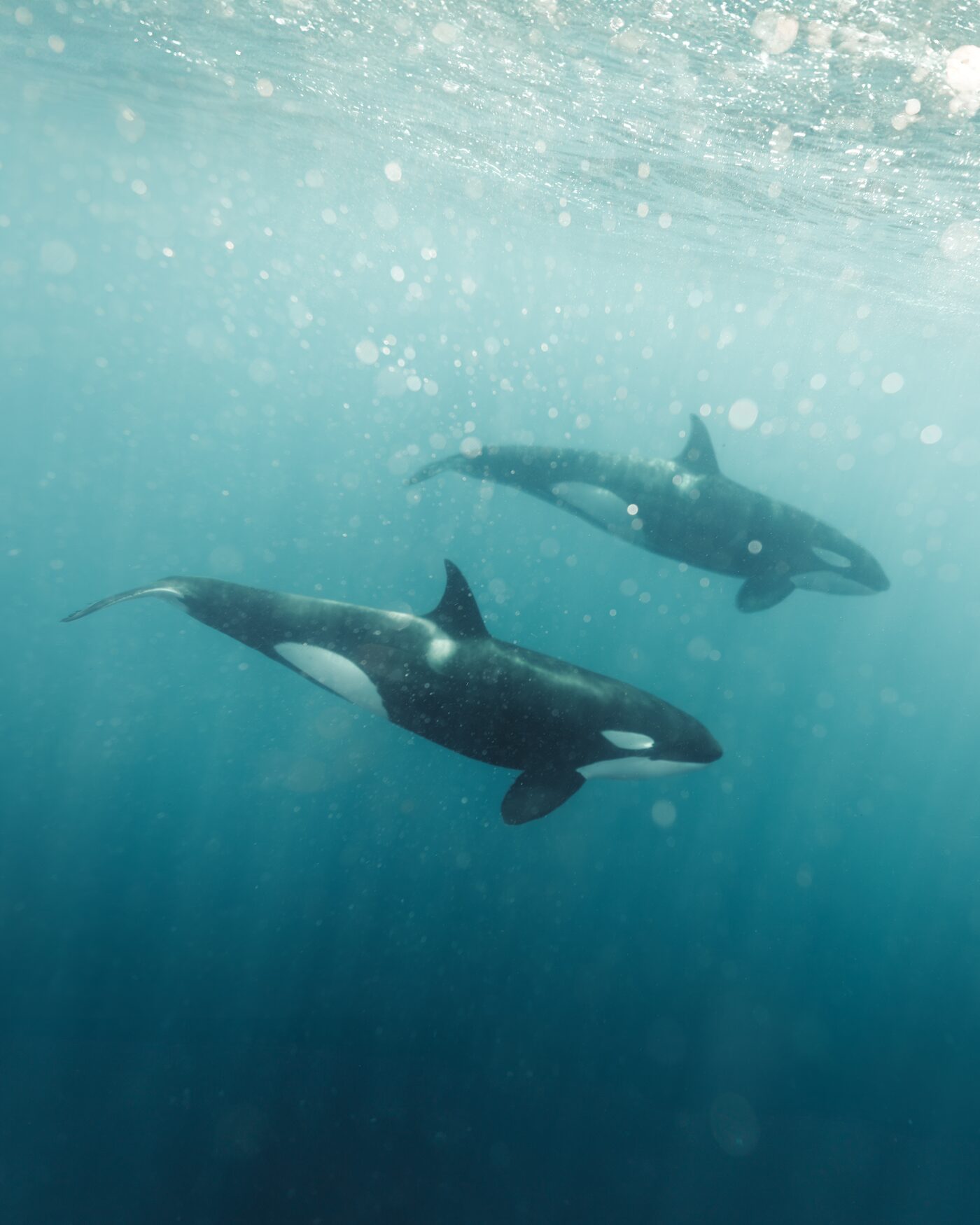
When friends ask me about these trips, this is the part I have to stress: those highlight encounters may be the talk of the trip, but they’re not the reason you should come. Dolphins, whales, sometimes orcas — they’re an incredible bonus. But if you come hoping for orcas specifically, you’ll go home disappointed. Come for the mobulas. Accept the rest as gift.
The crowd problem, and why your operator choice matters more than your gear
La Ventana was a quiet fishing town until social media turned it into a peak-season hotspot. I get it — that’s how I got here too. But the influx changed the math. On a bad day you can have ten boats crowding a single fever, engines running, people jumping in from every side. The rays disappear in minutes.
Good operators know who to talk to and when. When there’s a real opportunity for a great drop, they won’t rush guests into the water for a brief, hurried encounter. That’s part of why their price is higher and the experience is better — they know what they’re looking for and what will lead to a truly meaningful encounter in the water.
The mobulas spook easily. A fever of ten thousand can vanish in sixty seconds if a boat enters wrong. The difference between a quiet day and a great one is almost entirely about whose boat you’re on.
Here’s a few things to look for in an excellent operator:
- They employ certified guides. There’s a rigorous training process guides go through in Mexico to be able to lead a group on the water. They’re trained not only in water safety, but in the rules and regulations for how to interact with different species in the water.
- They train guests on how to enter the water for a drop. There’s a way to slip in with mobulas — quietly, from the side, no splash. Good operators brief this on the panga before anyone gets in. Bad ones let you cannonball.
- They cap group size, and walk away from a crowded encounter. Eight to ten people in the water at once is a working maximum. The harder discipline is the second part: if an operator pulls up to a fever that’s already surrounded by boats, the right call is to leave and find a quieter one. Plenty of operators don’t make that call.
- They respect other fishermen and captains on the water. This is a working ocean. Local fishing communities were here long before anyone came to swim with mobulas. Good operators stay clear of active lines, hold radio etiquette, and don’t crash other captains’ drops.
- They employ the community and reinvest locally. Tourism revenue should stay close to the place it came from.
The two operators I trust here are listed in my Baja field note, linked at the bottom of this post.
What’s next
A full Baja gear guide is up here — what works in the water and on the panga, the seasickness pieces I’ve learned the hard way, and a packing card you can save. After that, an underwater photography post: what to actually do with a camera when 500 rays are passing six feet beneath you and you only have so much breath. I’ll link both as they go live.

For the operators I’ve used and would recommend, see the Baja field note on The Survey Party.
— · —
Sent from somewhere wild.
Leave a Reply


